
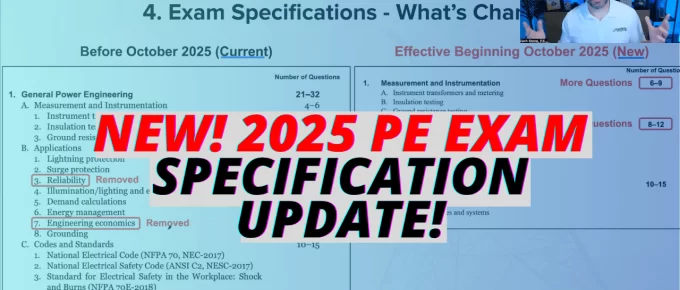
NCEES® recently updated the Power PE Exam specifications for the first time since 2018! The new changes go into effect starting October 2025. Watch the webinar replay below to get ahead of the curve on the new exam changes and craft a study plan that sets you up for success. In this webinar, you’ll discover:
The Reference Handbook for the Electrical Power CBT (Computer Based Testing) PE Exam is Here!
👇 Click play to watch or listen to this article on the new reference handbook for the CBT Electrical Power PE Exam: On July 15th, 2020, NCEES® officially released the first version of the supplemental Reference Handbook for the new computer-based testing (CBT) format for the Electrical and Computer: Power PE Exam. We read through […]
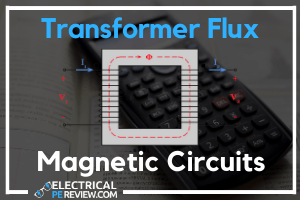
How to Solve Transformer Flux, Reluctance, MMF, and Magnetic Circuits
Transformer Magnetic Circuit Diagram Magnetic circuits used to be one of my least favorite types of problems on the electrical power PE exam. It seemed overly complicated and resources that taught this type of problem were hard to find without diving too far into the subject of physics, which is beyond what the PE exam […]
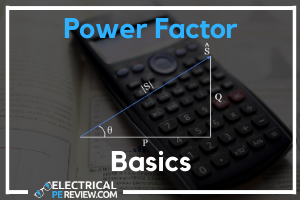
Power Factor Basics for the PE Exam, Phasor Diagrams and Power Triangles Explained
Power Triangle for a Single-phase Circuit What’s in this Article? Click below to jump to any section: Power Factor Basics Video Example With Phasor Diagrams, Power Triangles, and Unity Power Factor Explained Calculating the Power Factor (PF) of a Single-phase Circuit Using Voltage (V) and Current (I) Calculating the Power Factor (PF) of a Single-phase […]
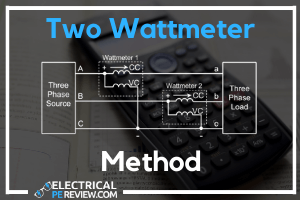
3 Steps for Solving the Two Method Wattmeter Problem
Two Method Wattmeter Diagram Connected to a Three-phase System What’s in this Article? Click below to jump to any section: Basic Rules, Circuit and Formula P = W1 + W2 (Two Method Wattmeter) Phasor Diagrams and Solving for W1 and W2 (Two Method Wattmeter) Shortcuts and Tricks (Two Method Wattmeter) Questions? Thoughts? Leave a Comment […]
October 2019 Electrical PE Exam Results – PASS!
Congratulations to our October 2019 PE exam semester students! Below are just a handful of the emails we have received shortly after the first round of results of the electrical PE exam were released. For more complete reviews be sure to check out the Most Recent Exam Results section from our premium course page.
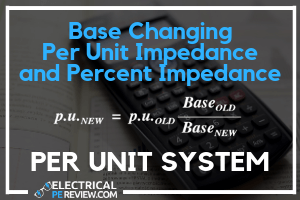
Base Changing Percent Impedance and Per Unit Impedance
Have you ever noticed that the fraction in the formula for base changing per unit (or percent) impedance appears to be upsidedown? For example, when compared to the standard per-unit base change formula shown below, the new base and the old base appear to have switched places: In this article, I’m going to show you that […]

4 Wire High Leg Delta Transformer Connection
Click play to watch the video for this worked out problem: What’s in this Article? Click below to jump to any section: Introduction Solving for phase voltages Solving for center tapped voltage magnitudes Solving for center tapped voltage angles Solving for the high leg voltage method 1 Solving for the high leg voltage method 2 […]
April 2019 Electrical PE Exam Results
It’s always an exciting time when the results of the PE exam come out. Many have been eagerly waiting after a tremendous amount of hard work and we could not be more proud of our April 2019 students!. Below are just a handful of the emails we have received shortly after notifications were received that […]
April 2018 PE Exam Results – Pass!
The results of the April 2018 Electrical Power PE Exam are beginning to be released by each state. I thought I would share some of the most recent emails from successful students that we have received while we wait for the remaining states to release their results. Did you know you can sign up for the […]
Symmetrical Components Single Line to Ground Fault Electrical PE Exam
Symmetrical components is a subject that makes most engineers wince in pain and frustration when they first hear these words. Before the days of computer-assisted fault current calculations, all fault calculations were done by hand. In the modern world, short circuit calculations are completed with the help of computer simulated calculations, however, the NCEES® Electrical […]
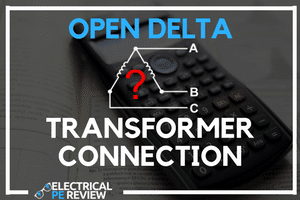
Open Delta Transformer Connection
How much power can an open delta transformer deliver? How much power can an open delta deliver compared to a standard three phase delta transformer? Where does the power formula for the open delta transformer connection come from? What are the phasor diagrams for an open delta transformer? What about the current and voltages for […]
New 2018 NCEES Practice Exam for the Electrical Power PE Exam
In November 2017 NCEES® released a new edition of their official PE Electrical and Computer: Power practice exam (ISBN: ISBN: 978-1-932613-92-6). In this article we are going to address two main questions: If you already have the older edition, should you still purchase the newer edition released in November 2017? What does the new NCEES® practice exam […]
2018 Changes to the NCEES® Exam Specifications
As of November 2017, NCEES® has officially updated the Electrical Power PE Exam Specifications starting 2018 for all future exams. They also released a new edition of the NCEES® official practice exam for the Electrical Power PE Exam. At first, there appears to be a lot of changes but the good news is that the PE […]
Per Unit Example – How To, Tips, Tricks, and What to Watch Out for on the Electrical Pe Exam
There is a lot of confusion surrounding the per unit system, and rightfully so. If you’ve never used it before, it is easy to become confused with all of the individual pieces that make the system work. To help clear things up, here is an in-depth break down on an example question that is similar to […]

What Do Successful Engineers that Pass the Electrical PE Exam have in Common?
One of the questions I get asked the most from students is: “Zach, how many Months do I need to study to pass the PE exam?” Each and every person has their own individual needs based on industry experience, math background, and test taking skills. This means that it is close to impossible to say exactly […]
Qualitative Practice Problem – Power Supplies
Did you know, that the most common feedback about the NCEES Electrical Power PE Exam is that exam takers are often surprised at the high number of qualitative questions that appear on the exam? A qualitative question is a test question designed to test your application of theory to select the most appropriate answer and […]
April 2017 PE Exam Results 2.0
This is part two of emails received from successful April 2017 Exam students after they took and passed the PE exam. If you haven’t seen the explanation from part one, you can read it here: April 2017 PE Exam Results – Happy Students! The purpose of this post is to motivate anyone gearing up to […]
April 2017 PE Exam Results – Happy Students!
The results of the April 2017 PE Exam are starting to be released and students of Electrical PE Review have been contacting me so I can keep track of the results. I’m happy to report that the results so far have been overwhelmingly positive. I am still waiting to hear back from each […]

Calculator Shortcuts and Tricks for Working with Units QUICKLY
Did you know that one of the most common reasons to get a question wrong even when you’ve done all the right steps is by making a mistake on the units? I bet that sounds familiar. Have you ever worked a problem that had all sorts of different units and you either entered it into […]
Base Impedance – Do We Use Single Phase or Three Phase Values to Calculate?
Related Article: Try our fully worked out Per Unit Example with the following free article: Electrical PE Review – Per Unit Example: Tips, Tricks, and What to Watch Out for Imagine you come across a three phase system with per unit impedances and you need to calculate the actual value in ohms: […]

Leading and Lagging Cheat Sheet! Printable Reference
The following two rules will fix 99% of any mistakes you might be tempted to make with leading vs lagging power factor for the PE exam. What’s in this article? – Leading and Lagging Cheat Sheet: Click below to jump to any section. Power Angle Rule #1 Power Angle Rule #2 Lagging Power Factor Diagrams Leading Power Factor […]
Avoid These Three Phase Power Formula Mistakes!
I want to share with you the the most common mistakes that students make with three phase power formulas that lead them to getting robbed of correct answers on the PE exam, and remind you why specific notation is so important. My goal of this article is to get you out of the bad habit […]

Recommended Books and References to Help Pass the Electrical Power PE Exam
Updated for the most recent NCEES® Exam Specifications Since the PE exam moved to computer-based testing (CBT), outside books, notes, and personal references are no longer allowed in the exam room. Instead, NCEES® provides the digital Reference Handbook and required code books directly on the exam computer, making speed with digital searches and on-screen code […]

TI-36X Pro: The Best Calculator for the Electrical Power PE Exam
The TI-36X Pro is hands down the best calculator for the Electrical Power PE Exam and the good news is that it is CHEAP! Let’s face it: You are going to have a hard time solving complex math problems without a good calculator in your arsenal which is why we reviewed six different calculators from the NCEES approved […]

National Electrical Code (NEC) for the Power PE Exam
**Update: Be sure to purchase the 2017 National Electrical Code (NEC®) or the 2017 National Electrical Code® Handbook (recommended) for the Electrical Power PE Exam for all exams from 2018 to 2020. The National Electrical Code (NEC) is an important body of knowledge developed over a great period of time to prevent electrical related fires and […]
Confusing Impedances – What’s the difference?
The many “-tance” terms of Electrical Engineering There are many different types of impedance components and they all rhyme, making it hard to remember which one is which. Many even have the same units, which can lead to even further confusion. Don’t let the same “-tance” ending fool you. If you run into a question on the […]
Electrical PE Exam Qualitative Theory Question of the Week
Following the theme of preparing for qualitative theory and concept questions, which caught many students off guard during the 2016 October Electrical PE Exam, here is another example of how to combine several different formulas to derive a relationship that solves a qualitative question. Sample Question: True or False: The capacitance of a transmission […]
Thoughts on the 2016 October Exam, and How to Solve Qualitative Theory Questions
The 2016 October NCEES Electrical PE Exam was described by test takers as strikingly heavy in qualitative theory based questions compared to what was expected. The large majority of practice material and sample exams focus mostly on quantitative math questions, and this caught many examinees off guard who over prepared for quantitative questions but under […]
Complex Number How To’s: Math & Converting Vectors and Phasors
While not an individual exam topic, complex numbers and vector mathematics are a key fundamental skill that appears on numerous questions throughout the exam. You can expect to see them anytime complex impedances, apparent power, and phasors with a magnitude and angle appear. It helps to have a comfortable understanding of what complex numbers are […]

Square Root 3 and Three Phase Power – Where Does it Come From
The square root of three. This is one of the top 5 most misunderstood and asked about topics in three phase power. Why and where do we use the square root of three (1.73) in our formulas when solving questions for the Electrical PE Exam, and just where exactly does it come from? Having a solid […]
Calculator Tips and Tricks for the Electrical PE Exam
This is a quick and short how to guide to using calculators for complex number analysis, converting back and forth between rectangular and polar, and how to carry out complex math without making mistakes. Every calculator handles complex numbers a little differently and it is up to you to be familiar with how yours operates. […]